

12 standard: paper 2 planning

Here's the question we worked with on Wed. 11.3.09:
“What happens in fiction is what distinguishes it…” Using at least two works, show how far your interest in novels and short stories has been based on the events and how much of your interest has been in other aspects?
Here are the notes preparing a thesis statement:
10: reader response essay

The goal of this essay is to explain how you experienced reading the play relative to specific techniques and elements of the play. In a reader response essay, you may refer to yourself as a reader, (using ‘I’ or ‘we’), explaining how specific elements of the play affected your emotional and intellectual response. You should not express your attitude about the quality of the play: it should analyze the way the author uses the text to have an effect on a specific reader, namely yourself or a reader just like you.
Basically, you are linking technique to the impact it has on the reader, instead of theme. Your thesis statement will identify the specific effect the identified techniques or features have on your reading of the play.
Choose one of the following prompts below: I have listed them in order of increasing difficulty. Again, please choose wisely.
Uploading London photos
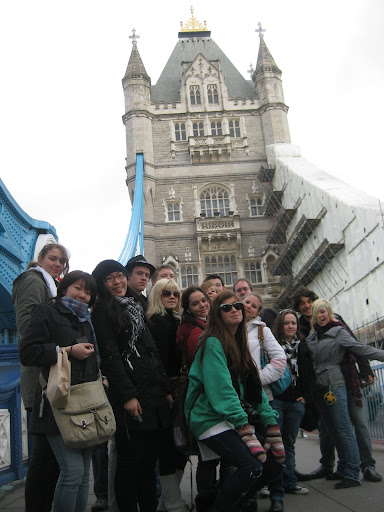
I've created a Picasaweb site for our London pictures. Here's the link to see photos.
Here's how to upload photos:


London trip

I've created a Google map for the grade 10 London trip. Check it out!
Here is also a pdf of the trip information.
Much Ado About Nothing act III quotations

For 2 (TWO) of the quotations below, explain the significance of each passage. Relate it to a theme, the development of character or the development of conflict.
For each passage, you must cover the needed analysis in less than 200 words.
10A: Due Tuesday10 February.
10B: Due Wednesday 11 February.
"Some Cupid kills with arrows, some with traps." (III, i)
"If I see anything tonight why I should not marry her tomorrow, in the congregation where I should wed, there will I shame her." (III, ii)
"Yet Benedick was such another, and now is he become a man. He swore he would never marry; and yet now in despite of his heart he eats his meat without grudging. And how you may be converted I know not; but methinks you look with your eyes as other women do." (III, v)
10: sample Much Ado quote paragraph

"There is a kind of merry war betwixt Signior Benedick and her. They never meet but there's a skirmish of wit between them." (I, i)
Leonato provides exposition for the relationship between Benedick and Beatrice and one of the conflicts of the play, and sets the tone for that conflict. Leonato’s use of war as a metaphor is apt since Benedick is a soldier, and foreshadows the contrast between being a soldier and a lover as discussed later in the play. The paradox of a 'merry war' sums up a view of love: that it is competitive, but at the same time light. This sets the context for the relationship between the two characters and lets the audience know that their respective jibes are not to be taken seriously. Beatrice has already made insulting comments regarding Benedick (contrasting the praise the messenger has heaped on him), and so the audience sees her as a shrew, but Leonato's explanation contextualizes her behaviour and makes it less threatening. Leonato follows this exposition with the further explanation that they engage in a 'skirmish of wit' when they meet, and Beatrice’s play on words on the lost wits of Benedick illustrate her use of wit. This is contrasted in the scene with Hero’s lack of verbal interaction generally, encouraging the audience to see Hero and Beatrice as foils.
199 words
Much Ado About Nothing act II quotations

For each of the quotations below, explain the significance of each passage. Relate it to a theme, the development of character or the development of conflict.
For each passage, you must cover the needed analysis in less than 200 words.
11: Antigone website

Structure and Plot of Antigone is a website about, well, the structure and plot of Antigone. I'm using it in class.
10: Playing Shakespeare site

Shakespeare's Globe has a website called Playing Shakespeare about aspects of their production of Much Ado About Nothing. Interesting and useful, I think.
11: Fatboy Slim
Enjoy.
9B: Macbeth performance assignment

You will be delivering a performance of part of a scene from Macbeth and analyzing your own performance in a character/interpretation assignment. Here are the rules:
- You may work alone and perform a soliloquy, or in groups. If you work in a group, each group member needs to have a major part, with at least 5 lines. Minor parts can be cut or filled with members of other groups.
- The scene should be at least one minute long per group member but a minimum of 3 minutes long (unless doing a monologue).
- You may cut lines, speeches, and anything else that gets in the way of a clean & focused performance, but you need to use the original language.
- You need to bring some kind of costumes. Decide as a group what you want and what you can bring.
- The scene should have a clear interpretation: you will use the scene to tell us what you think the play is really about.
- You will not need to memorize your lines, although you need to know them well.
- Your goal should be to be interesting, meaningful, creative, and well prepared.
9B: Macbeth essay sample introduction and conclusion

thesis statement: While the behaviour of Macbeth and Lady Macbeth demonstrate a conflict between emotion and reason, Shakespeare shows that emotion is more powerful.
introduction:
Generally, in the modern world, we prefer reason over emotion. We are taught that reason and logic are more trustworthy, while emotions can lead us astray. However, Shakespeare presents a different view in Macbeth. While the behaviour of Macbeth and Lady Macbeth demonstrate a conflict between emotion and reason, Shakespeare shows that emotion is more powerful.
conclusion:
In conclusion, the behaviour of M and LM shows the superiority of emotion over reason in the play. But can that be true in our modern world? Yes, reason plays an important role in all decision making, but emotion is needed to provide the human aspect that ends up being so important to us. We as people are not only rational but also emotional by our nature: to ignore this is to risk making our lives tragedies, like Macbeth.
9B: Macbeth essay

You will write a four-paragraph essay, following the provided outline. In each paragraph, use the best possible structure, and provide examples whenever appropriate. Also, use transitions between paragraphs to explain the relationships between the ideas.
Choose one of the conflicts of the play we have identified:
• appearance / reality
• ambition / honor
• fate / will
• guilt / amorality
You will explore what the play has to say about that conflict.
Introduction: Find an interesting way to introduce the conflict generally, put the conflict in the play and end with a thesis statement.
Thesis statement: In a single sentence, explain what you will say about the conflict, including the structure of the two body paragraphs.
Body paragraph one: Show the presence of the conflict throughout the play. Use examples and use the key words from your thesis statement to analyze those examples.
Body paragraph two: Explain how Shakespeare resolves the conflict. Use examples (probably from the last act or two) and analyze.
Conclusion: Restate the thesis briefly and express your own ideas about that conflict in the real world.
Rules
Essays should be 500-1000 words long.
In the final draft, essays should be 1½ -spaced or double-spaced.
Due Dates
Tuesday, 20 January: complete working drafts reviewed in class
Thursday, 22 January: published essay due
Assessment
A: Content | B: Organization | C: Style & Language |
· Do show a perceptive understanding of the ideas from the novel? · Do you carefully choose details from the novel or other wise to support your ideas? · Do you discuss and analyze ideas in a manner which focuses on significant concepts in a sophisticated manner? | · Are the paragraphs organized in a way to focus on the main idea of the essay? · Are examples integrated in a sophisticated and focused manner? · Do transitions show cohesion and movement between paragraphs? | · Are you ‘following the rules’ of spelling, grammar and punctuation? · Do you use the right word for the right situation? · Are you using the language of literary analysis? |